

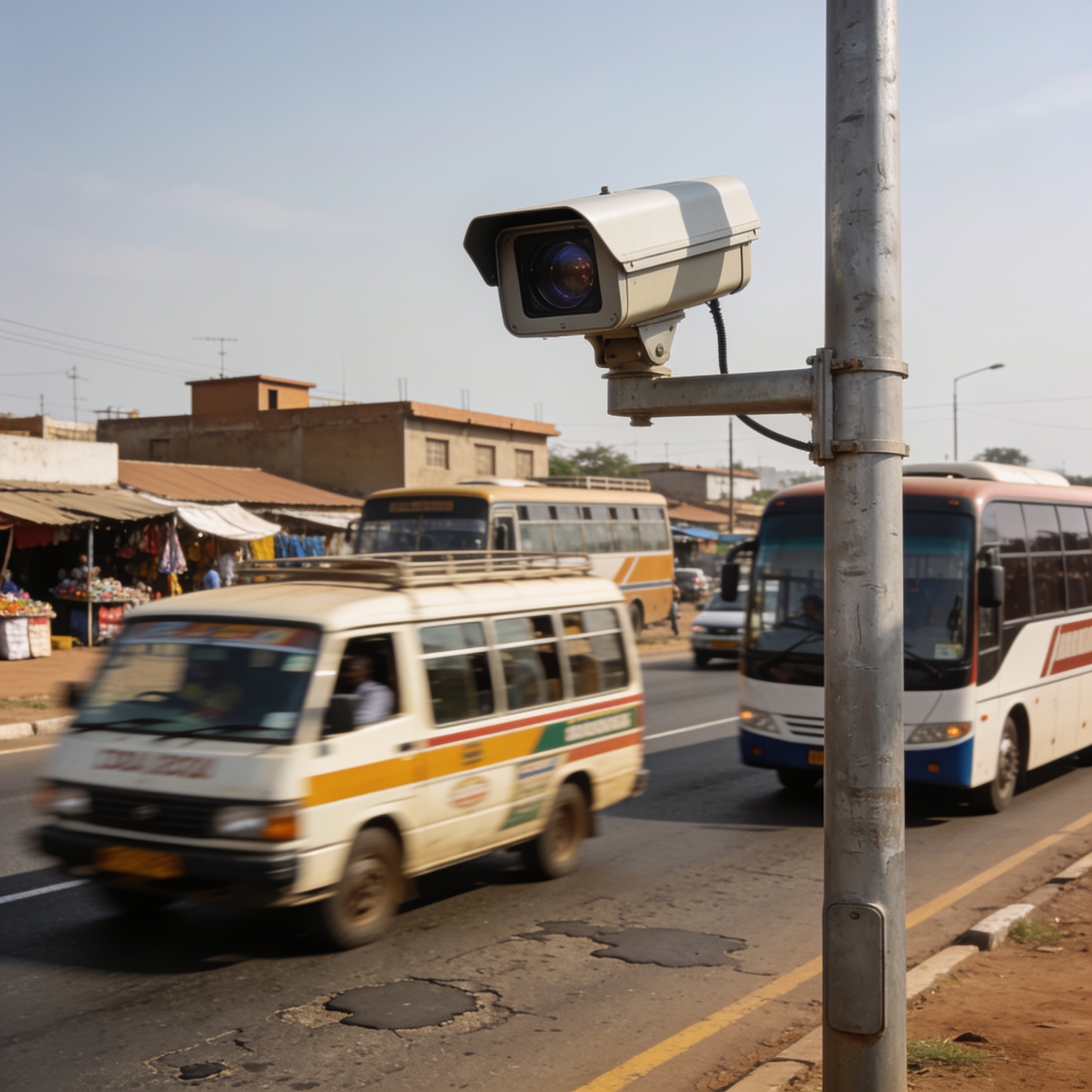
Zimbabwe has switched on a national platform aimed at keeping a closer watch on the country’s public service vehicles, with officials framing the rollout as a decisive step towards reducing road deaths and restoring discipline among transport operators.
The National Speed Monitoring System (NSMS) was commissioned in Harare on Wednesday by Transport and Infrastructural Development Minister Felix Mhona, who said the technology would give authorities a clearer picture of how buses, kombis and other licensed vehicles behave on the road.
What the system is meant to do
At its core, the NSMS is a monitoring layer that captures data on vehicle movement and operating patterns. According to the ministry, that information will be used to identify operators whose vehicles consistently breach speed limits and to build a record of compliance that can guide enforcement.
The stated objectives are threefold: saving lives, raising the standard of road safety, and creating a culture of accountability among operators who carry fare-paying passengers every day.
For commuters in Harare and other urban centres, the practical effect is expected to be felt in how aggressively vehicles are driven on the capital’s busiest routes, where speeding and unregulated picking-up of passengers have long been cited as contributing factors in collisions.
Oversight moves from the roadside to the data centre
Until now, enforcement has relied heavily on traffic officers positioned at checkpoints and on ad hoc roadblocks. The new arrangement shifts part of that burden onto a system that can flag problematic vehicles continuously rather than only when an officer happens to be watching.
That shift matters for regulators, who have struggled to monitor a large and fragmented public transport fleet. With operator-level data in hand, authorities can move beyond individual fines and engage transport companies directly about the conduct of their drivers.
Officials have indicated the platform will strengthen oversight of public transport operators as a whole, rather than treating every incident as an isolated case.
Why speed remains the central concern
Speeding sits at the heart of Zimbabwe’s road safety problem. It shortens reaction time, lengthens braking distance and turns what might otherwise be a minor collision into a fatal one. Public service vehicles amplify the risk because they carry multiple passengers at once, meaning a single crash can claim several lives.
Transport associations have at times argued that pressure to meet daily revenue targets pushes drivers to race between stages and overload vehicles. A monitoring system that produces a verifiable record could, in theory, give operators a reason to reward measured driving rather than sheer speed.
The success of the NSMS will depend on how its findings are used. Data alone changes nothing unless it feeds into licensing decisions, penalties and, where necessary, the suspension of routes run by repeat offenders.
Questions that still need answers
Several practical issues are likely to shape how the system performs over the coming months.
- Coverage: How quickly the platform extends beyond the initial deployment to reach intercity routes and rural service vehicles.
- Enforcement follow-through: Whether violations picked up by the system translate into swift penalties rather than accumulating in a database.
- Operator cooperation: The extent to which transport companies install and maintain the required equipment without dragging their feet.
- Data governance: What safeguards exist to ensure vehicle and driver information is used strictly for road safety purposes.
The bigger road safety picture
The launch comes as Zimbabwe continues to grapple with the human and economic cost of road traffic accidents. Beyond the immediate loss of life, crashes place sustained pressure on hospitals, insurers and the families left to absorb lost incomes.
Speed monitoring is one component of a broader response that also includes road rehabilitation, vehicle fitness testing and driver education. Analysts have long argued that these strands only work when pursued together, since safer roads and better vehicles do little to help if drivers continue to treat speed limits as optional.
For passengers, the test will be whether journeys become measurably calmer and safer. For government, the test is whether a system launched with fanfare in Harare develops into a functioning enforcement tool rather than a piece of infrastructure that quietly falls into disuse.
What is clear is that the authorities now have a mechanism capable of producing evidence about how public transport is actually driven. The question is what they do with it.