
Harare, Zimbabwe. The first week of October 2026 has brought a compact but revealing set of messages from government, business and the public: Zimbabwe is trying to pre-empt a climate-driven food bill, rebuild the logistics behind its emerging lithium sector, manage a wave of returning migrants, absorb a high-profile death, and test its political balance in urban wards.
Food imports and El Nino relief
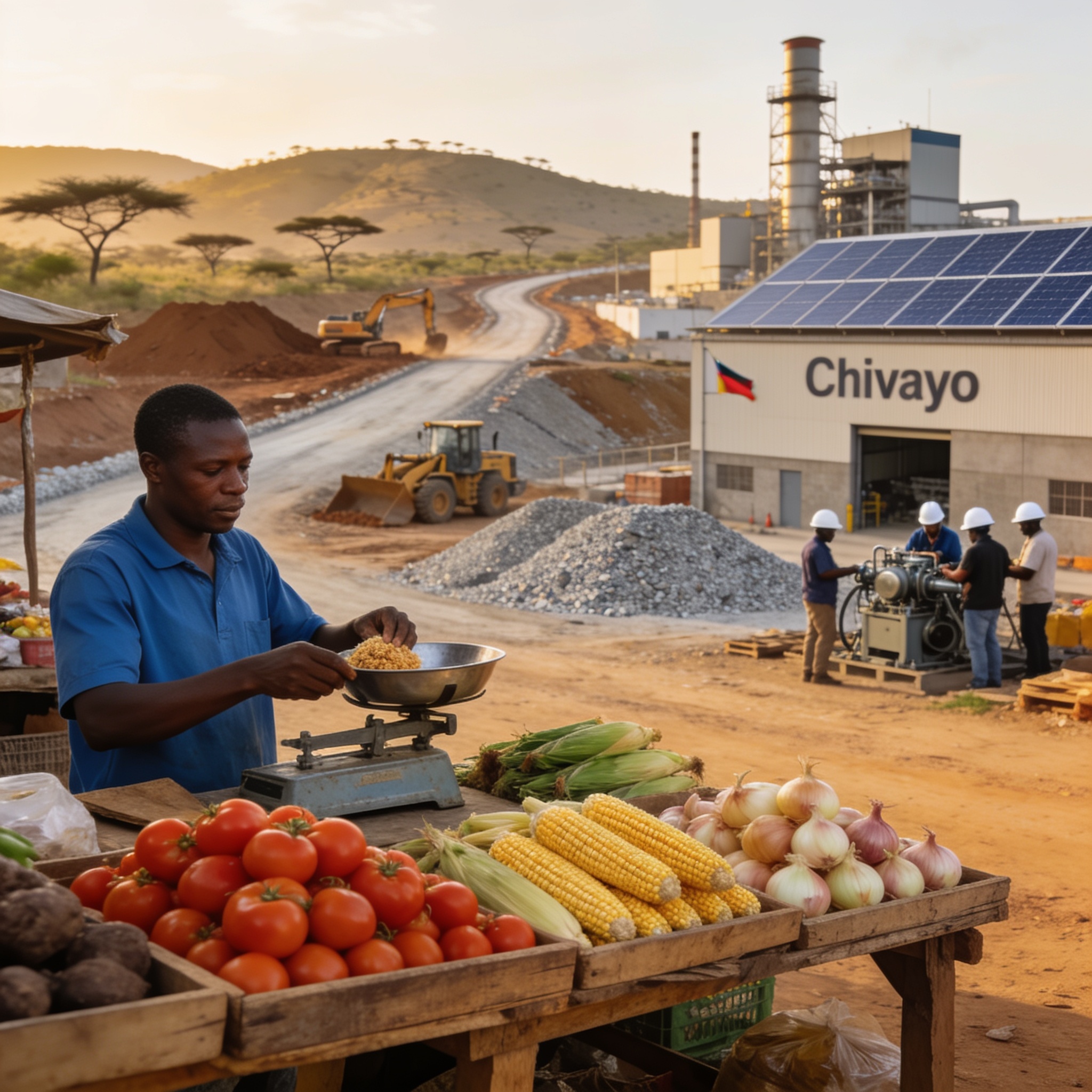
Finance Minister Mthuli Ncube said in Bulawayo that Zimbabwe plans to remove import duty on food as part of a multi-pillar package aimed at shielding households from weather shocks and external price pressure. The move is framed as a buffer against possible crop shortfalls linked to El Nino conditions, while also responding to global supply-chain tensions that have raised fuel and commodity costs.
For Harare readers, the detail that matters is timing. A duty waiver can lower landed costs, but it only works if retail channels, border administration and domestic farmers keep the savings moving toward consumers. If implemented transparently, the policy may help urban families and small traders in high-density suburbs. If not, import relief risks being captured by middlemen or undercutting local producers already struggling with inputs and financing.
Mberengwa road work unlocks lithium logistics
Far from Harare, a practical development in Mberengwa illustrates how mining growth depends on roads. Sandawana Mine has engaged three contractors to tar the 53-kilometre route from York Business Centre to Sandawana, a dusty link that has constrained movement of minerals and everyday traffic. The works, which began on 3 September 2026, also include rehabilitation of Mutsime Bridge near the mine.
The project is tied to access for the US$430 million lithium processing plant at Sandawana. Because the area also hosts gold and other mineral ventures, smoother roads can improve export routes toward South Africa and strengthen trade between Masvingo, Mberengwa and regional corridors. District officials say about 93 local workers are involved, and private investment has already begun around service points such as lodges and filling stations.
Returnees from South Africa need more than transport home
Another sensitive theme is reintegration. By late July, the government reported more than 116,000 Zimbabweans had returned from South Africa, many after anti-immigrant pressure intensified around a June 30 exit campaign. Some came home with savings, tools or skills, and a few have restarted small businesses. Others face a harder landing: no secure employment, broken family arrangements and limited support services.
Harare policy circles now face the question of whether returnee management can become an economic opportunity. Vocational training, small-grant access, employer partnerships and teacher-recruitment channels can help, but only if they reach people quickly. A programme that merely records arrivals or offers emergency shelter will leave households under pressure in crowded districts, informal trading belts and high-population townships.
Bulawayo by-election, Chivayo mourning and the political weather
Politically, Zimbabwe Electoral Commission results in Bulawayo Ward 1 gave Zanu PF candidate Mathias Tichaona Tsikira a commanding majority, reinforcing the party has a competitive presence in a city often watched for urban voting signals.
The news cycle has also been shaped by the death of businessman Wicknell Chivayo, whose helicopter crash in Marondera Rural on 30 September killed six people, including his wife Lucy Muteke. President Emmerson Mnangagwa and Vice President Kembo Mohadi expressed mourning, reflecting the high public visibility Chivayo had built through charity gestures, luxury displays and close social connections with politicians and celebrities.
Chivayo’s story carries lessons beyond celebrity. He became a symbol of wealth tied to state tenders and controversial scrutiny. While critics highlighted alleged corruption, he was acquitted in 2024 in a case linked to an advance payment connected to the Gwanda Solar project, and anti-corruption authorities said they found no direct evidence implicating him in a separate transaction. The mixture of fame, legal contestation and sudden death has made his story a recurring test of how Zimbabwe discusses accountability and public wealth.
STEM skills for the next growth cycle
Education remains the longer bridge between climate relief and mining-driven growth. Higher and tertiary officials have urged colleges and universities to strengthen science, technology, engineering, health and research training, arguing that Zimbabwe’s future competitiveness depends less on raw enrolment and more on skilled human capital. Partnerships involving the Mastercard Foundation and FAWEZI are expanding STEM access for students from marginalised communities.
Harare takeaway
This week’s headlines point to a Zimbabwe trying to manage immediate pressure while betting on structural assets: cheaper food through duty relief, stronger lithium routes through road construction, returnee productivity through skills and enterprise, and a more technical education pipeline. Whether ordinary households feel the benefit will depend on implementation, especially as Harare’s informal economy, mining corridors and political institutions absorb each change.