
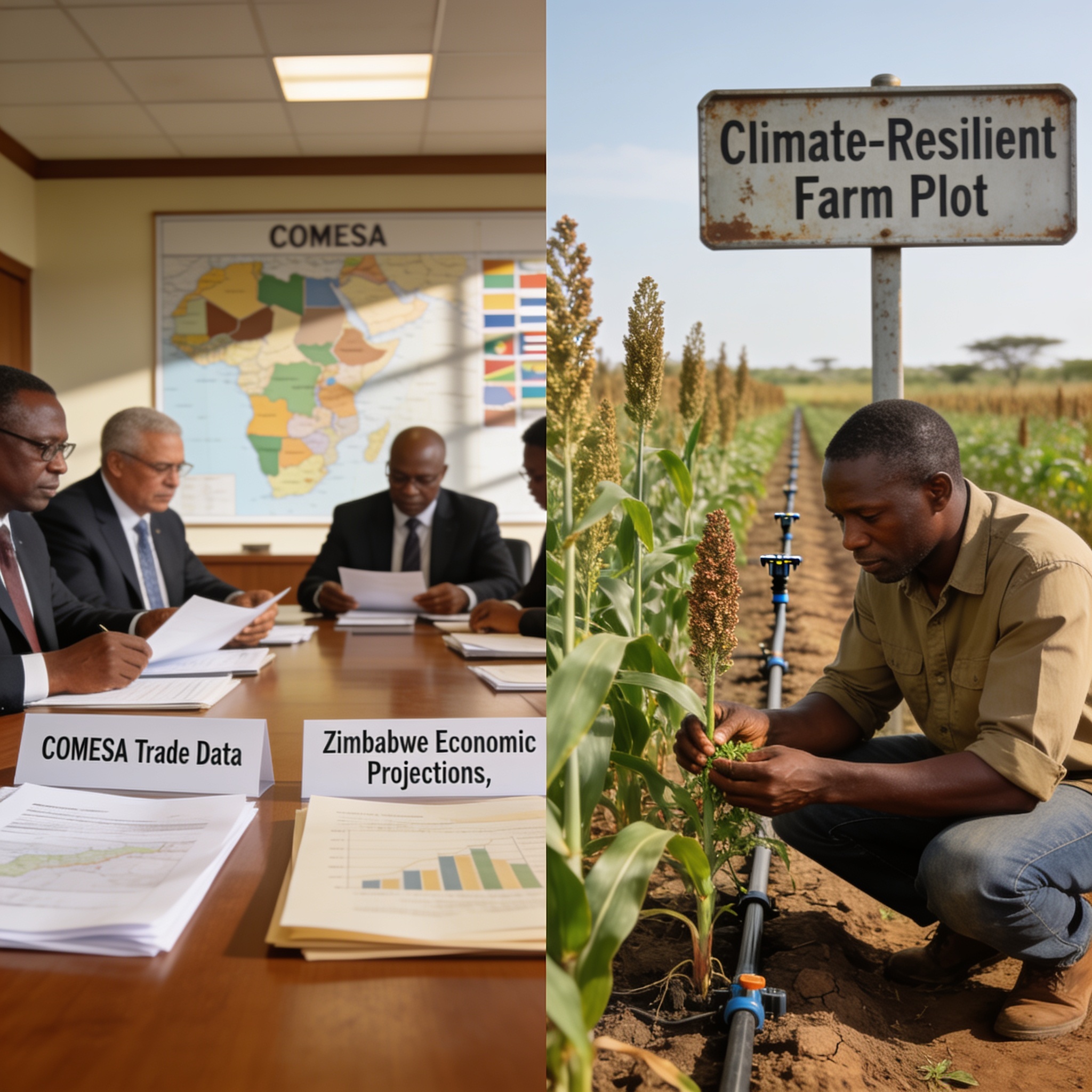
Harare is poised to become the epicenter of regional commerce next month, as regional business leaders, investors, and policymakers converge for the 19th COMESA Business Forum. The gathering aims to bolster trade and investment across the Common Market for Eastern and Southern Africa, signaling Zimbabwe’s renewed focus on integrating its economy with broader regional value chains.
The forum comes at a critical juncture for the country. While recent indicators suggest robust agricultural output—with the 2025-2026 season yielding a record 2.82 million tonnes of maize—climate variability remains a persistent threat. In response, authorities in Matabeleland South have directed all seven districts to develop specific action plans to mitigate the impact of El Niño weather patterns. This proactive stance underscores a growing recognition of the need to blend modern meteorological data with indigenous knowledge systems to protect the agricultural sector, which remains a cornerstone of the national economy.
Beyond agriculture, the business community is witnessing tangible developments in key sectors. Namib Minerals has secured a US$6.5 million non-dilutive term loan from African Banking Corporation of Zimbabwe (BancABC) to advance its Redwing Mine project towards bankability. This financial injection highlights ongoing investor confidence in Zimbabwe’s mining potential, despite global economic headwinds.
In the telecommunications sector, Econet InfraCo has reported a 30% reduction in diesel consumption by leveraging artificial intelligence. This innovation is particularly significant given rising fuel costs driven by international geopolitical tensions, demonstrating how local tech solutions can drive operational efficiency and cost savings for major infrastructure players.
However, not all national conversations are purely economic. A cybersecurity debate has emerged regarding the diplomatic corps, with experts urging the government to move away from using consumer email platforms like Yahoo for official consular communications in London. Critics argue that true digital sovereignty requires controlled, secure government infrastructure, a matter of national security as well as administrative efficiency.
On the social front, communities are seeking stability and healing. In Kariba, traditional leaders have requested a temporary suspension of all marine activities on Lake Kariba for early October to conduct a cleansing ceremony following the tragic Mbuya Nehanda ferry disaster. This ritual, led by Chief Mola, reflects the deep cultural integration of governance and community well-being in Zimbabwe, aiming to restore calm waters and honor the departed.
As Zimbabwe navigates these diverse challenges—from hosting high-level regional trade talks to addressing local security incidents and climate resilience—the interplay between policy, technology, and tradition will continue to define its national narrative in the coming months.