
The start of October 2026 in Harare has been defined by a stark contrast between sudden tragedy and persistent political maneuvering. While the nation reels from the fatal helicopter crash of controversial businessman Wicknell Chivayo, other significant narratives regarding Zimbabwe’s economic trajectory, sporting ambitions, and constitutional future have unfolded simultaneously.
The Impact of the Chivayo Crash
The death of Chivayo, alongside his wife Lucy Muteke and four others in rural Marondera, has sent shockwaves through both local and regional diplomatic circles. Kenyan President William Ruto, who referred to Chivayo as a “dear friend,” expressed deep sorrow over the loss, highlighting the businessman’s extensive network across African leadership.
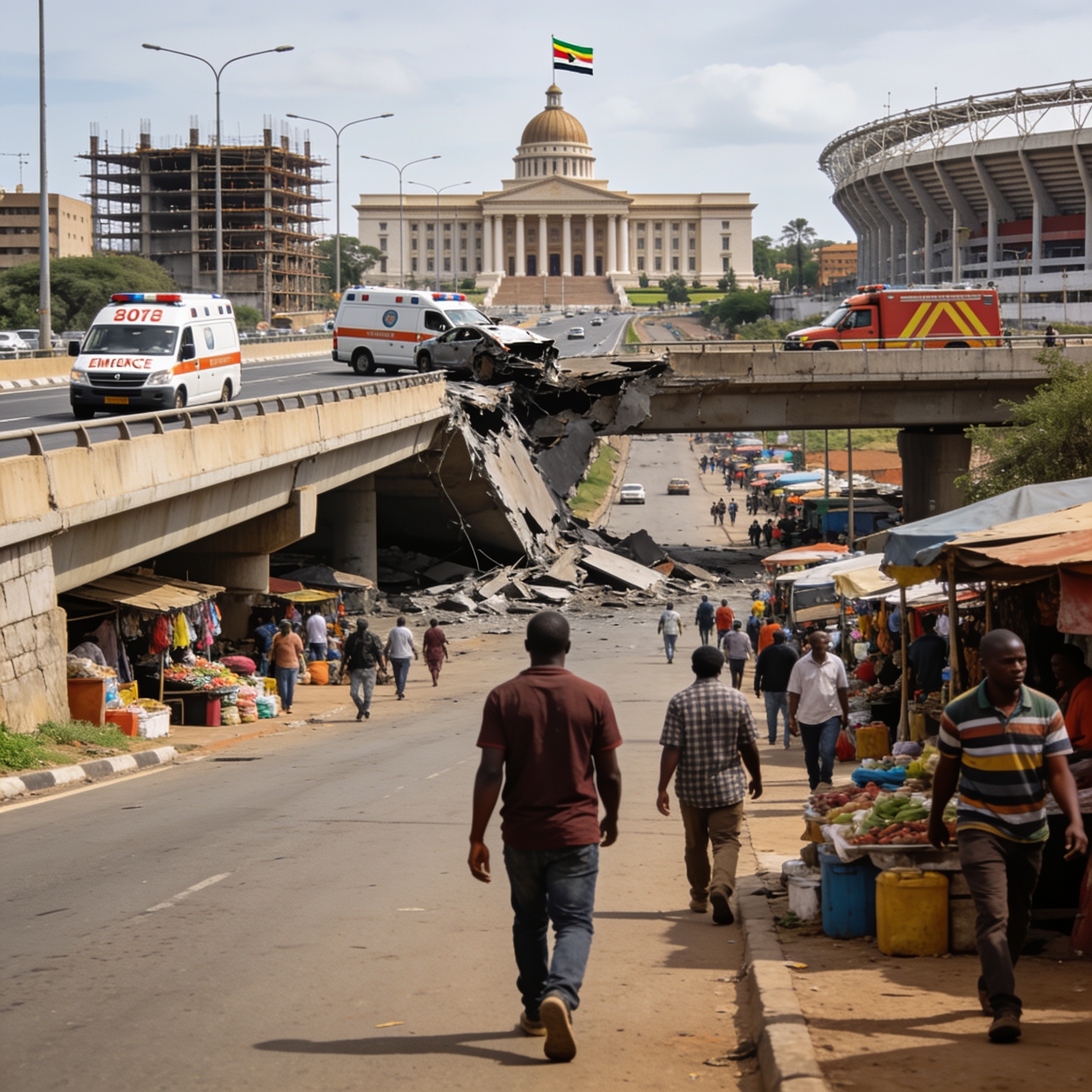
However, the reaction within Zimbabwe has been markedly different. Social media platforms and public spaces have been filled not with mourning, but with commentary reflecting the polarizing nature of Chivayo’s public persona. Critics and observers have pointed to the “legacy” left behind, with many expressing little sympathy for a figure whose wealth was often linked to opaque government contracts and public controversies. The accident has also sparked questions about emergency response infrastructure in the region, with locals noting the delay in ambulance services from Harare to the crash site.
AFCON 2028: Botswana Pulls Out
>While the news cycle is dominated by the crash, a significant development in sports governance has emerged. Botswana has officially withdrawn from the joint bid with Zimbabwe and South Africa to host the 2028 Africa Cup of Nations (AFCON).
The decision was driven by financial constraints and a lack of government guarantees required by the Confederation of African Football (CAF). The Botswana Football Association had previously argued that such guarantees were premature, but the government’s firm stance has left Harare and Pretoria to continue the bid as a two-nation partnership. This withdrawal complicates logistics but keeps Zimbabwe’s hopes for hosting continental football alive, provided infrastructure investments align with CAF standards.
Economic Resilience and Mining Investments
On the economic front, Treasury officials have urged for data-driven policies to achieve an ambitious 8% growth target, signaling a push for evidence-based reforms amidst a challenging global landscape. Private sector confidence appears to be holding, with Namib Minerals securing a $6.5 million loan to advance the restart of the Redwing Mine. This funding is a critical step toward bankable feasibility studies and demonstrates continued interest in Zimbabwe’s mineral wealth despite macro-economic headwinds.
Media group Zimpapers also projected a positive outlook for the remainder of the year, citing resilience in the trading environment. These developments suggest that while high-profile deaths make headlines, the quiet machinery of economic and industrial investment continues to function.
Constitutional Tensions Persist
Perhaps the most consequential story running parallel to the Chivayo news is the ongoing legal battle over the Constitution of Zimbabwe Amendment (No. 3) Act (CAA3). President Emmerson Mnangagwa has called for further amendments to the Electoral Act and Constitutional Court Act, following changes that extended presidential terms and altered election methods.
The Constitutional Court is currently weighing five separate challenges against CAA3, brought forward by opposition parties, war veterans, and civil society groups. These cases contest the removal of direct presidential elections and the extension of terms without a referendum. As four of these cases were recently removed from the roll for potential consolidation, the judiciary faces a crucial test of its independence. Legal experts warn that any attempt to further alter the constitutional order without broad consensus could trigger deeper political instability.
As Harare digests the shock of the Marondera crash, the underlying currents of economic adjustment, sporting strategy, and constitutional debate will likely shape Zimbabwe’s trajectory for the remainder of 2026.