

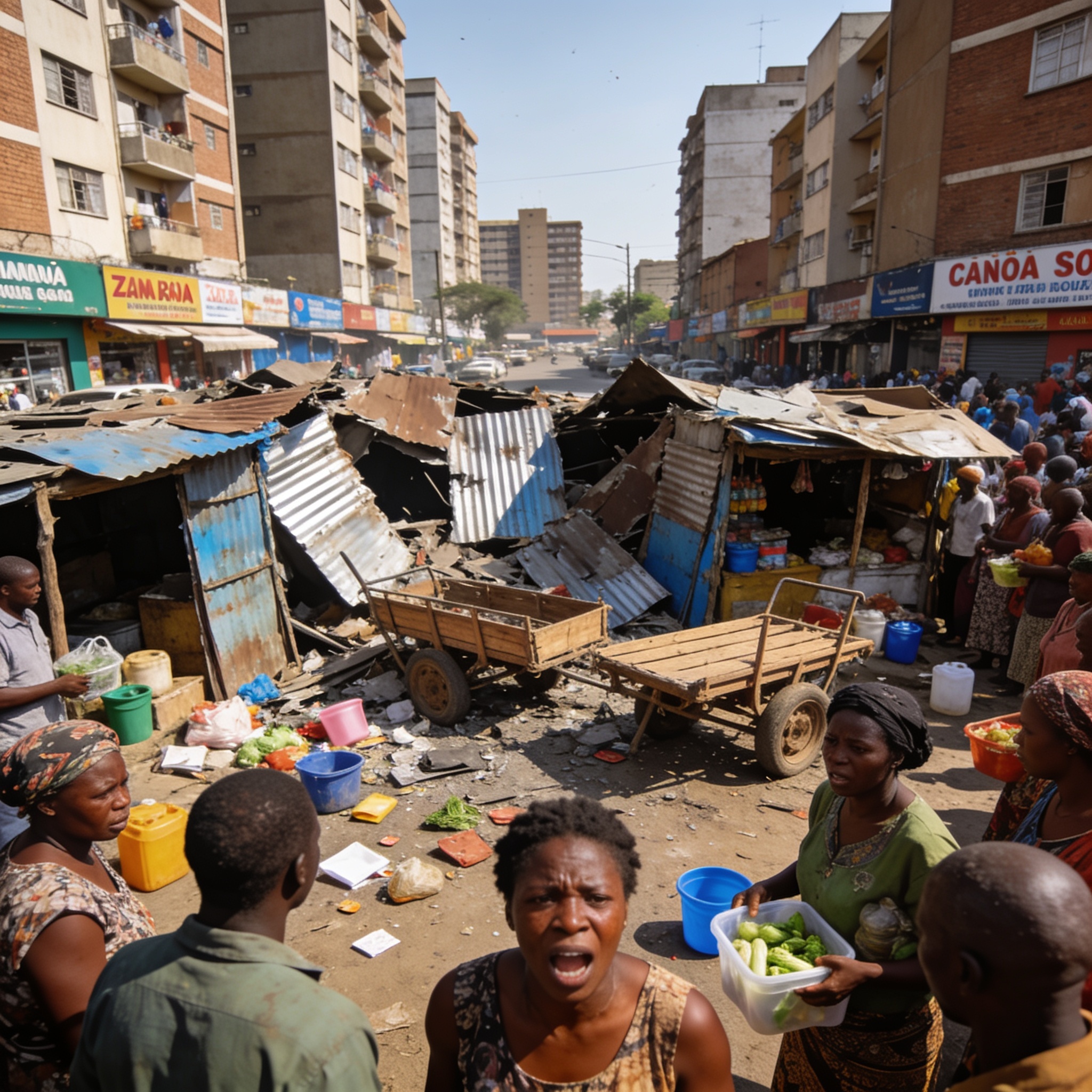
Harare is witnessing a wave of demolitions and forced evictions of street vendors as the government’s ultimatum for informal traders to vacate undesignated sites takes effect. The order, which required vendors to clear city pavements by 9 September 2026, has drawn sharp criticism from opposition figures and social justice advocates who describe the operation as a brutal betrayal of Zimbabwe’s poorest citizens.
Action Democratic Movement (ADM) president Alice Nyamande condemned the move, stating bluntly: “You cannot clean up the streets by cleaning out the poor.” Her statement reflects a growing sentiment that the crackdown is not about enforcing municipal bylaws, but about punishing ordinary people who were once used as political pawns.
For years, informal settlements and street vending spots expanded across Harare with little official interference. Many of these structures were established through politically connected housing cooperatives, often named after liberation heroes, lending them a veneer of legitimacy. Vendors were allowed to occupy pavements because their presence provided a captive audience for political mobilization. Party officials frequently controlled the allocation of vending spaces and collected daily fees from traders seeking protection.
But critics argue that the same citizens who were encouraged to occupy land and streets in exchange for political loyalty have now been abandoned. Social justice advocate Tendai Ruben Mbofana wrote that many Zimbabweans effectively traded their democratic rights—including the power to directly elect the president and enforce term limits—for short-term survival favors, symbolized by handouts as trivial as “two pieces of chicken.” Now that the ruling elite no longer needs electoral validation, the leverage that once protected informal businesses has evaporated, and bulldozers are clearing away lives and livelihoods.
The demolitions and evictions come amid broader concerns over governance and the rule of law. The Judicial Service Commission recently announced promotions of three High Court judges, a move that has reignited long-standing worries about judicial independence. While unrelated to the street crackdown, the timing underscores a climate in which institutional accountability is questioned.
For Harare’s displaced vendors and residents of demolished informal settlements, the immediate future is bleak. Many have lost homes and businesses with no compensation or alternative accommodation. The events serve as a harsh reminder, activists say, that political loyalty bought with cheap favors offers no protection when power no longer needs the poor.