
The dawn of October 2026 in Zimbabwe has been marked by a profound sense of national reflection and transition. The nation grapples with the sudden and tragic loss of prominent public figures, a sorrow that has drawn condolences from across the political spectrum, including Chimurenga music legend Thomas Mapfumo, who expressed deep sympathies for the victims of a fatal helicopter crash. While mourning is a universal human experience, Zimbabwe’s current moment demands a forward-looking gaze. The nation is at a crossroads, where grief intersects with urgent calls for economic transformation, technological advancement, and reinforced security protocols.
Accelerating Economic Transformation Beyond Raw Resources
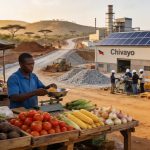
Amidst the emotional weight of recent days, the government has reiterated its commitment to a structural shift in the economy. Agriculture, Mechanisation and Irrigation Development Minister Anxious Masuka recently emphasised that Zimbabwean farmers must evolve beyond the traditional model of selling raw produce. The call is to embrace value addition, aggregation, and robust participation across agricultural value chains to maximise returns.
This directive aligns with a broader national strategy to industrialise. Midlands State University (MSU) is actively repositioning itself to ensure research does not remain an academic pursuit but becomes a driver of practical solutions and industrial growth. The focus is clear: translating laboratory findings into economic engines. This ambition extends to cutting-edge technologies, with prominent voices urging the nation to transform Artificial Intelligence (AI) from theoretical research into a powerful tool for industrialisation, engaging universities, the government, and the private sector in a coordinated effort.
Strengthening Borders and Combating Trafficking
While economic pivots are essential, the safety and integrity of Zimbabwe’s borders remain a pressing concern. Lake Kariba has emerged as a critical vulnerability, with the International Organization for Migration (IOM) warning that human traffickers and migrant smugglers are exploiting gaps in border surveillance. IOM Chief of Mission Diana Cartier highlighted that limited coast guard presence has made the vast reservoir an attractive alternative to heavily monitored land borders.
In response, President Emmerson Mnangagwa has indicated that the government will introduce the Trafficking in Persons Amendment Bill to protect citizens from transnational syndicates that lure Zimbabweans abroad with fraudulent job offers. The proposed legislation aims to strengthen prevention, control, enforcement, and coordination against these emerging criminal threats.
Local Innovations and National Unity
Beyond policy shifts, grassroots innovation offers hope and practical resilience. In southeastern Zimbabwe, particularly in Chiredzi, residents are adopting creative solutions to mitigate human-wildlife conflict. Farmers are painting artificial eyes on livestock to deter predators like lions and wild dogs, a technique proven effective in reducing losses. This example of local ingenuity demonstrates how communities can adapt and protect their livelihoods even in the face of increasing environmental pressures.
These developments come against a backdrop of complex public discourse, including debates on civic responsibility, accountability in governance, and the role of traditional leaders in preserving cultural unity. As Zimbabwe navigates this period, the convergence of mourning and modernisation signals a critical juncture in its ongoing national journey.