

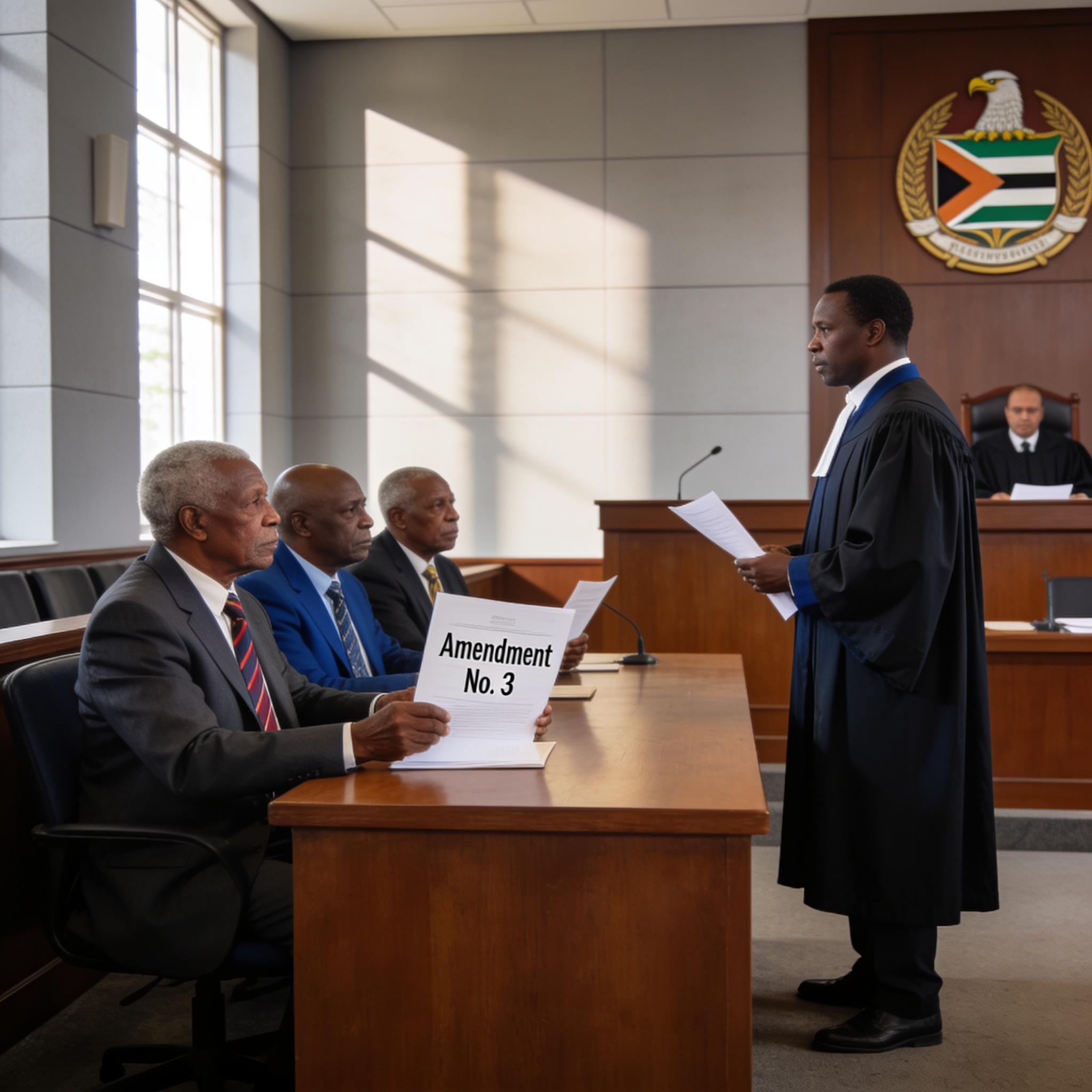
The Constitutional Court in Harare on Tuesday morning opened one of the most consequential legal dockets in Zimbabwe’s recent history, beginning to hear challenges against the Constitution of Zimbabwe Amendment Act No. 3 — the package of changes that redrew the country’s electoral calendar and altered how the head of state is chosen.
First before the bench was a case registered as CCZ 273/26, brought by six liberation war veterans who are contesting the removal of the direct presidential vote. Under the amended framework, the President is elected by Parliament rather than through a nationwide ballot — a shift the applicants say could not lawfully be made without first putting the question to voters in a referendum.
A different point of principle
The veterans are not new to the apex court. They previously mounted a challenge against the proposal to extend President Emmerson Mnangagwa’s stay in office, a matter the court declined to hear at the time, directing that it should first be ventilated in the High Court. Their legal team — Lovemore Madhuku, Lewis Uriri and Tawanda Zhuwarara — now says the fresh application rests on a separate constitutional question.
The argument advanced is that Parliament cannot be handed the power to choose a President without a popular vote approving that change, and that doing so breaches the Declaration of Rights. Until the amendments took effect, Zimbabwe’s President was selected through direct universal suffrage, a principle the applicants want the court to protect.
Longer terms, a bigger Senate
Amendment No. 3 did far more than alter the presidential selection method. It pushed the end of the current presidential term from 2028 to 2030, stretched both presidential and parliamentary terms from five years to seven, and enlarged the Senate from 80 to 90 members.
Those changes have generated their own litigation. President Mnangagwa’s recent appointment of 10 additional senators — a move enabled by the expanded Upper House — is among the matters already being contested as unconstitutional, and more challenges are queued behind the veterans’ case.
Legal analysts in Harare note that the sequencing matters. Should the court grant direct access and ultimately rule against the amended provisions, the implications would ripple through the 2028–2030 electoral timetable, the composition of Parliament and the wider governance framework built on the amended charter.
Gift saga shadows the hearing
The courtroom battle has been accompanied by an unusual public relations storm. On the eve of the hearings, businessman and socialite Wicknell Chivayo announced a package for Uriri reported to be worth about US$350,000 — a Range Rover Sport Autobiography valued at roughly US$250,000, plus US$100,000 in cash for the lawyer and his wife.
Uriri turned the offer down, saying he had last spoken to Chivayo, a former client, in June 2024. Within a day, accounts supportive of the businessman circulated older footage appearing to show the lawyer collecting a Land Rover Discovery said to have been purchased for him in Harare for about US$110,000 in late 2023 or early 2024.
Because the gifts surfaced just as the constitutional challenge reached the country’s highest court, the episode has fed speculation about motive. Nothing presented publicly so far links the presents to the litigation itself, and Uriri’s decision to decline the latest offer has been framed by his team as a matter of professional principle.
Why it matters beyond the courtroom
Zimbabwe’s courts have become the principal arena in which the country’s post-2023 constitutional settlement is being tested. The veterans’ application is the opening act in what is expected to be a lengthy procession of challenges, each seeking to unpick a different thread of Amendment No. 3.
For ordinary voters, the immediate stakes are about how — and by whom — the next President is chosen, and whether the terms they cast ballots for remain five years or stretch to seven. For political parties and civic groups, the hearings will shape how campaigns for the coming cycle are planned and funded.
What happens next rests with the bench. If direct access is granted, the court will proceed to hear argument on the substance of the electoral model. If it is refused, the veterans will be pushed back down the judicial ladder to the High Court — a route that would consume months before the core constitutional question is even argued.
Either way, Tuesday’s sitting confirmed that the fight over Amendment No. 3 is far from settled, and that Harare’s Constitutional Court will be the venue where the country’s next electoral chapter is written.