

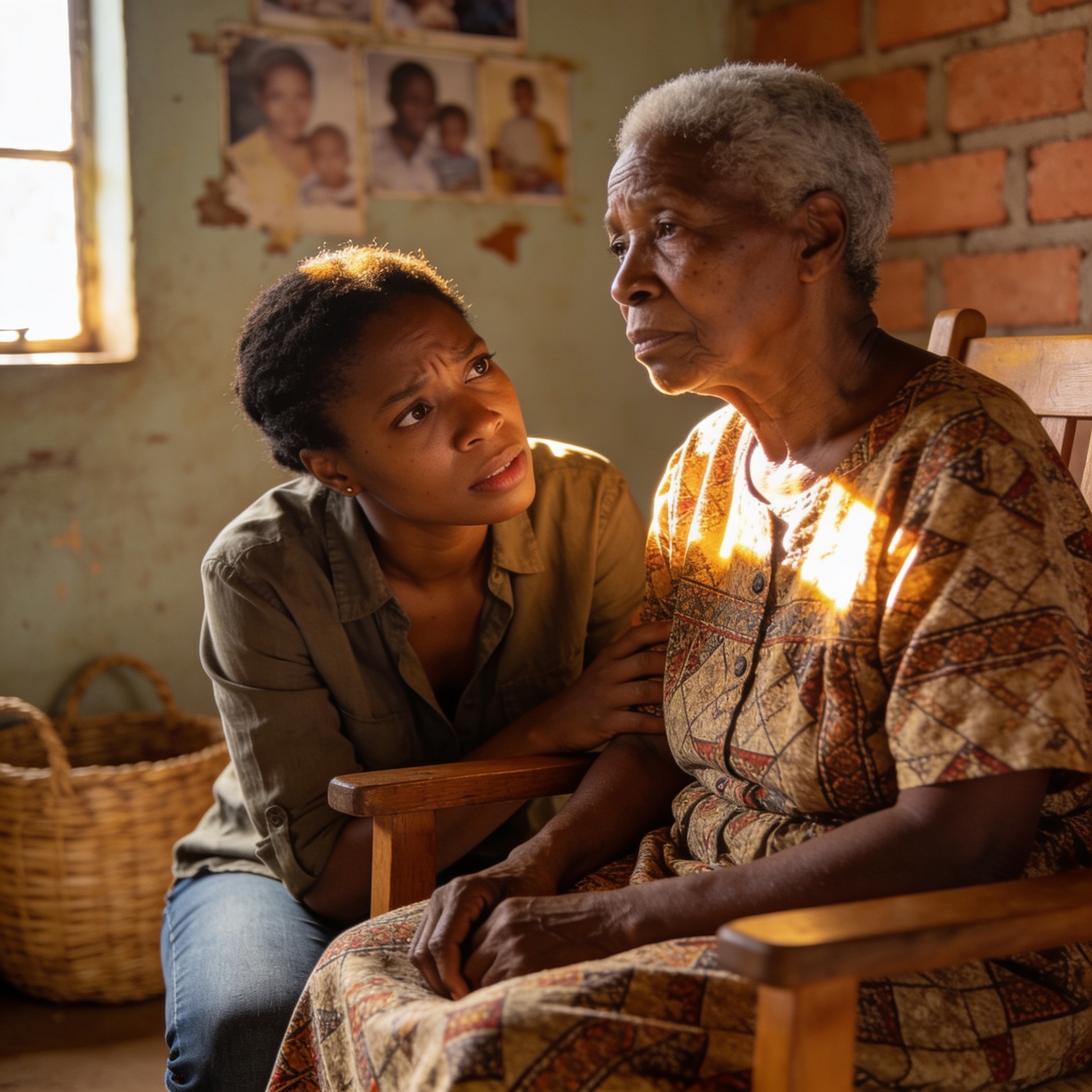
HARARE — The recognition goes first. Then the names. Then the birthdays, the church hymns, the route to the garden she once walked every morning without thinking.
For one Zimbabwean man, the change crept in over months rather than days. His grandmother would study his face with quiet concentration during visits, as if sorting through recollections that refused to arrive. Eventually she stopped placing him at all. The woman who had raised him no longer knew who he was.
His experience is not unusual. Across the country, thousands of households are quietly coming to terms with dementia — a condition that strips memory, language and independence — and finding that the systems meant to help them barely exist.
A slow, private disappearance
Dementia is an umbrella term for a group of progressive brain conditions, of which Alzheimer’s disease is the most common. The World Health Organization estimates that more than 55 million people live with dementia worldwide, and that figure is projected to rise sharply as populations age. Sub-Saharan Africa is expected to record some of the fastest increases, yet it remains one of the least prepared regions on earth.
In Zimbabwe, the signs are often dismissed long before they are named. Families explain away repeated questions as ordinary forgetfulness. A grandmother who forgets to switch off a stove is scolded rather than assessed. A grandfather who becomes irritable in the evening is described as difficult, not unwell.
By the time relatives accept that something is wrong, the disease is frequently advanced — and the household has already reorganised itself around caregiving.
Care falls on daughters and granddaughters
Zimbabwe has no meaningful network of residential or specialist dementia facilities. Long-term care for older people is largely informal, and the burden lands overwhelmingly on women: daughters, daughters-in-law and increasingly granddaughters, many of whom are also raising children or holding down informal jobs.
The work is round-the-clock and unpaid. It includes bathing, feeding, monitoring medication for unrelated conditions such as hypertension and diabetes, preventing wandering, and managing the confusion that worsens after nightfall.
Caregivers describe a particular kind of grief: mourning someone who is still alive, in the same house, on the same chair.
- Most families receive no formal diagnosis, meaning other treatable causes of confusion — infections, medication side effects, thyroid problems, depression — may go unchecked.
- Stigma keeps many households from discussing the condition, even with extended family.
- Spiritual explanations are common and can delay medical assessment, though faith often remains a vital source of strength for carers.
- Caregivers themselves report exhaustion, anxiety and depression, with almost no counselling available to them.
A health system stretched thin
Zimbabwe’s public health sector is already straining under infectious disease, maternal care and chronic illness. Geriatric medicine and old-age psychiatry are specialist fields with very few practitioners, concentrated in the largest cities. Outside Harare, Bulawayo and a handful of provincial centres, a family seeking a memory assessment may travel hundreds of kilometres — and still leave without a definitive answer.
Primary care nurses and community health workers, who see older patients most often, receive little training in cognitive screening. Where diagnosis does occur, the drugs available for Alzheimer’s disease are expensive and rarely stocked in public facilities.
Advocates argue that the cheapest interventions are also the most neglected: teaching health workers to recognise the warning signs, giving families practical guidance on safe environments and daily routines, and building peer support groups where carers can speak openly.
The long goodbye
For the family in that Harare living room, adjustment has meant rebuilding a relationship on new terms. Conversation has given way to presence. Shared history has been replaced by whatever the moment allows — a hand held, a song hummed, a plate of food eaten.
“She does not know me,” he said. “But I know her. That has to be enough.”
It is a sentiment echoed in homes across the country, where dementia remains one of Zimbabwe’s least visible public health challenges — carried not by hospitals or policies, but by relatives who simply keep showing up.