

A midnight switch-off for Channel 294
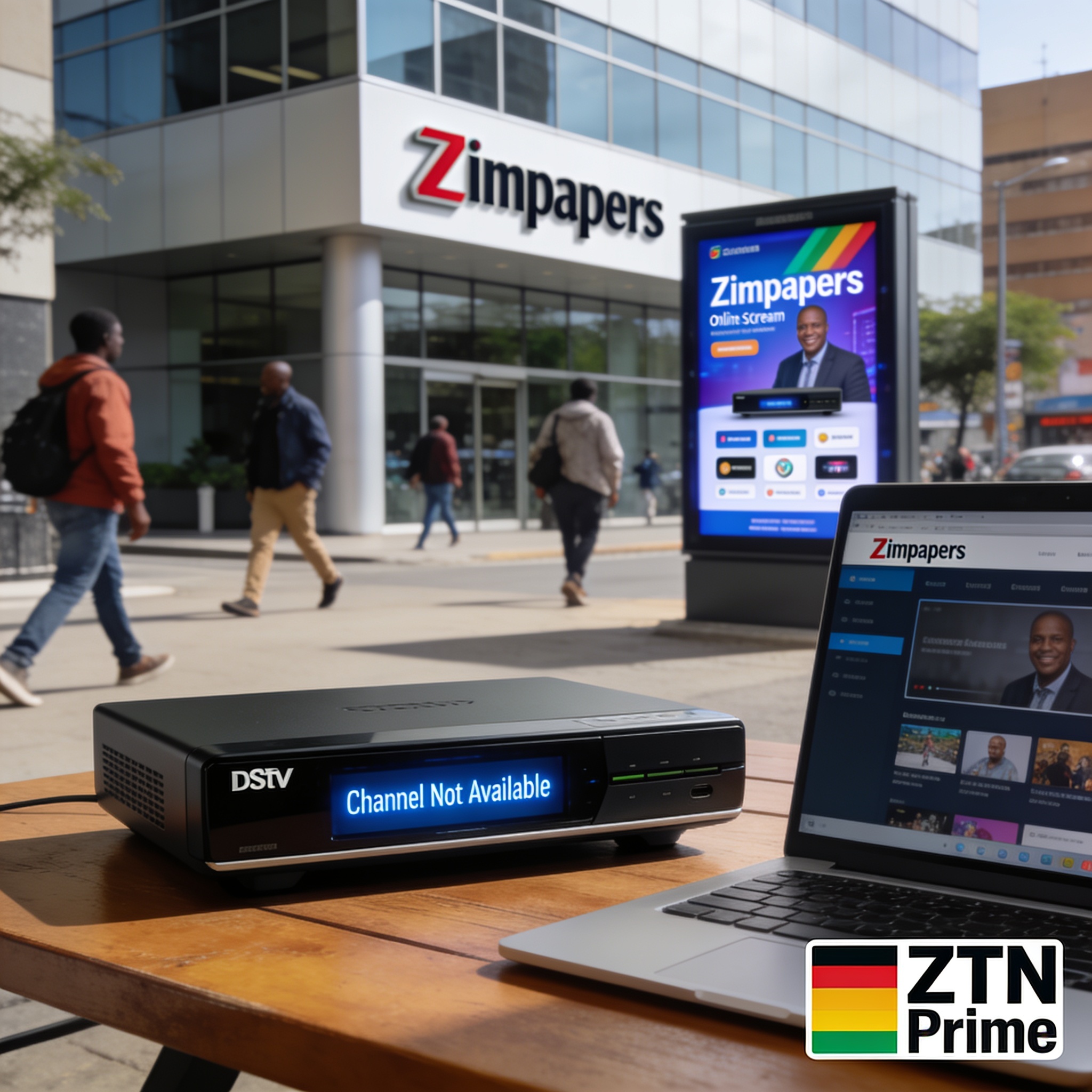
Zimbabwean DStv subscribers have been given notice that Zimpapers Television Network Prime is being taken off the pay-TV platform before October. The channel, which has occupied slot 294 since the middle of 2022, will stop broadcasting at 23:59 Central Africa Time on 30 September 2026.
The message, sent to account holders in the country, was brief and offered no explanation for the decision. But the writing had been on the wall for some months, with the station’s parent company already signalling a move away from conventional satellite carriage.
Four years after cracking open the airwaves
ZTN Prime launched amid considerable publicity on 24 May 2022, becoming one of the first privately licensed television stations to reach Zimbabwean living rooms after more than four decades in which ZBC TV faced no local competitor on the national stage.
It was licensed in the same batch as Associated Newspapers of Zimbabwe’s 3Ktv, Bulawayo-based KeYona TV and NRTV, which is linked to the Zimbabwe National Army. Between them, the new entrants were expected to reshape a broadcasting market that had been closed to private players since independence.
Channel 294’s removal means that for many viewers outside urban centres with reliable internet, one of those newer voices will simply cease to exist.
The bigger restructuring at Zimpapers
The withdrawal from DStv is being executed as part of a wider reorganisation at Zimpapers, the state-linked media group that owns the television network alongside its newspaper titles.
Board chairperson Doreen Sibanda had previously hinted that the company intended to take the station off traditional linear television and rebuild it as an internet-based service. Under the plan now being implemented, ZTN is being migrated to an over-the-top streaming model, while the group’s newspapers division is being reorganised around digital and mobile-first operations.
The shift carries a heavy human cost. Sibanda confirmed that 154 positions have been declared redundant under the revised operating model and that a retrenchment exercise has begun, carried out in line with the country’s labour legislation and the company’s human resources procedures.
In other words, the disappearance of a channel from the DStv grid is the visible edge of a much deeper internal overhaul — one that reorganises how the group gathers, produces and distributes content, and how many people it needs to do so.
What changes for viewers
Households that have relied on the satellite bouquet for local programming will need to adjust. Anything ZTN continues to produce will increasingly live online, which places new demands on viewers: a stable connection, a data budget and a device capable of streaming.
That is a markedly different proposition from a decoder that works whether or not the power stays on and the network holds up. For audiences in rural and peri-urban Zimbabwe, where connectivity remains uneven and mobile data is a significant monthly expense, the practical effect of the move may be reduced access rather than expanded choice.
Pay-TV carriage, after all, delivers a guaranteed audience and a predictable place on the remote control. Streaming offers greater editorial freedom and lower distribution costs for a broadcaster, but it asks far more of the person on the other end of the signal.
A sector in transition
Zimbabwe’s television industry is not alone in confronting this squeeze. Across the continent, broadcasters are wrestling with the same arithmetic: advertising revenue migrating to online platforms, the fixed costs of satellite distribution, and audiences fragmenting across social video, streaming apps and traditional schedules.
For ZTN Prime, the result is a farewell to the numbered channel it has called home since 2022 and an attempt to build an audience somewhere less certain. Whether that audience follows will depend on how quickly the streaming service matures — and whether the country’s digital infrastructure can carry it.
For now, subscribers have until the final minute of 30 September before Channel 294 goes quiet.