

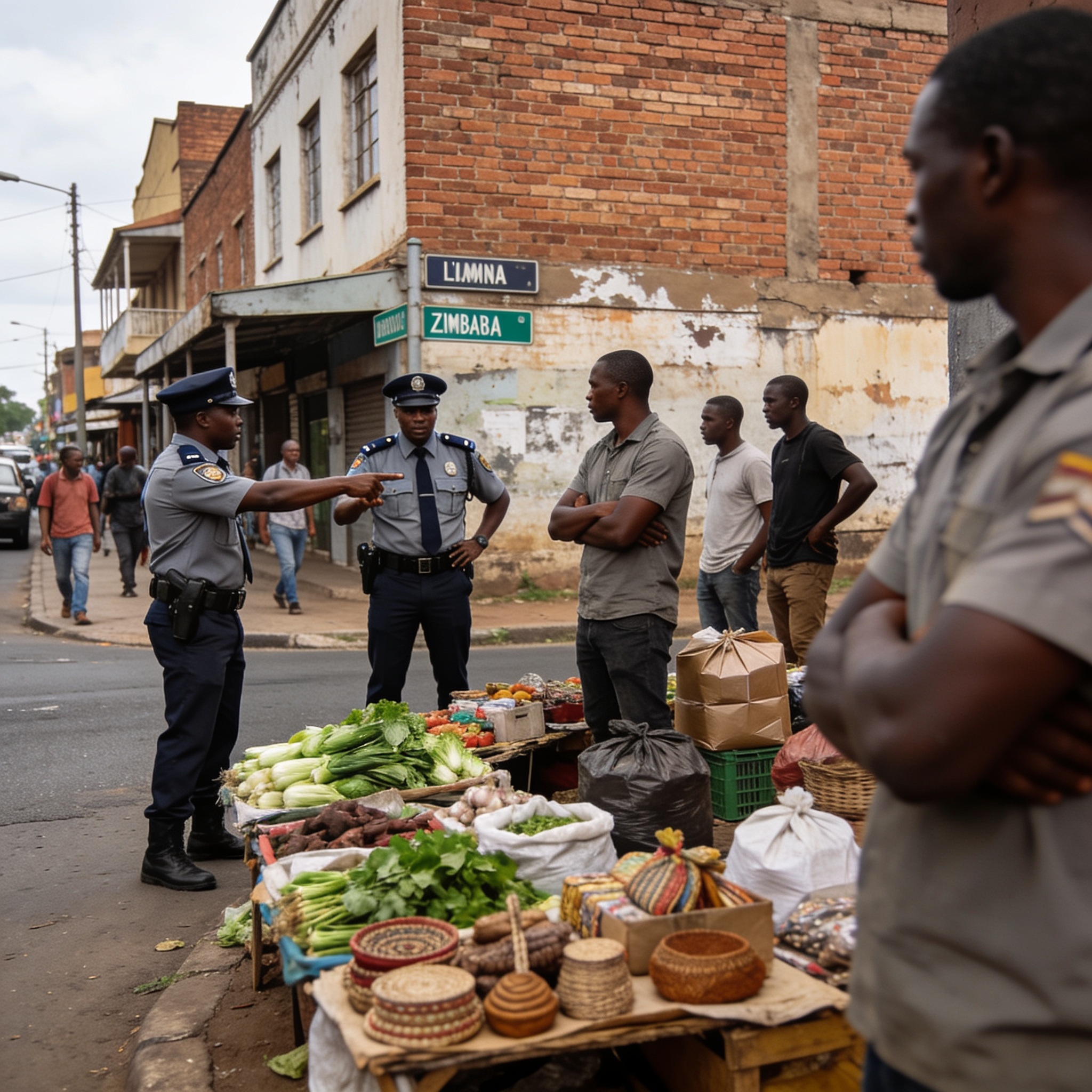
Harare and Chitungwiza are at the centre of a political storm following a brutal crackdown on street vendors that has seen municipal police and bulldozers destroy stalls and assault traders. The operations, part of a nationwide cleanup campaign, have reignited tensions over the government’s handling of the informal economy.
Under new restrictions effective immediately, vending in central business districts is limited to between 6am and 6pm, while traders in residential areas, including high-density suburbs, may operate until 8pm. The new operating hours apply across all 92 local authorities as authorities intensify enforcement against illegal vending.
Government officials insist the measures are not a ban on vending but a regulation of where and when it can take place. They say vending remains permitted in designated areas and that 113 local authority bylaws are under review. However, the enforcement has drawn sharp criticism from opposition parties, who argue the government is addressing symptoms of an economic crisis without tackling the conditions that have driven millions into informal trading.
Opposition Condemns ‘Assault on the Poor’
The MDC has accused Zanu PF of turning against the same impoverished traders it allegedly mobilised for political support. MDC Secretary for Information and Publicity and Presidential Spokesperson, Lloyd Damba, described the recent operations in Harare and Chitungwiza as an assault on poor Zimbabweans whose livelihoods depend on vending.
Damba said stalls had been destroyed and traders’ stock confiscated, while vendors were subjected to violence and humiliation. He argued that many vendors are former formal-sector workers who lost their jobs following the closure or downsizing of industries, citing factories in Willowvale, Graniteside, Msasa and Chitungwiza Industrial sites.
He also linked the growth of informal trading to the broader decline of Zimbabwe’s economy, describing vending as a survival strategy rather than a choice. Damba specifically accused Zanu PF of abandoning vendors after previously cultivating their political support through groups such as “Vendors for ED”.
Economic Roots of the Crisis
The Zimbabwe Communist Party (ZCP) has similarly traced the growth of vending to the country’s economic restructuring and industrial decline. ZCP General Secretary Ngqabutho Nicholas Mabhena said vendors are a creation of failed economic policy, arguing that street trading accelerated after the adoption of the Economic Structural Adjustment Programme (ESAP) in the 1990s and continued as workers were retrenched.
Mabhena questioned the government’s changing description of informal traders, noting that authorities had previously pointed to vendors as part of the economically active population when making arguments about unemployment, yet now treat the same group as a problem requiring removal from urban spaces.
Political Shifts and Vendors’ Fate
The political context has changed significantly since the previous election cycle. On July 7, 2026, President Emmerson Mnangagwa signed constitutional amendments extending presidential terms from five to seven years and replacing direct presidential elections with a parliamentary system for choosing the president. The amendments also moved the next election beyond 2028, which commentators said undermined democracy.
The ZCP leader argued these changes in Zimbabwe’s political timetable had also altered the government’s relationship with vendors. Mabhena said that now elections are over and the constitution has been amended to delay elections beyond 2028, vendors are no longer useful in the eyes of Zanu PF, which is why they are being dealt with in this manner.
He added that vendors must understand they are part of the working class, citing a 2015 International Labour Organisation resolution that vendors should belong to trade unions so they can join forces with the rest of the working class.
Government Defends Regulation
The government has said it is not banning vending but regulating where and when it can take place, with vending remaining permitted in designated areas. Authorities are also reviewing 113 local authority bylaws as part of the nationwide cleanup campaign targeting illegal vending and other activities in urban centres.
However, the MDC insists the crackdown represents more than an urban-management policy. Damba accused Zanu PF of using the poor and then discarding them, warning other groups politically aligned with the ruling party that they too could eventually face the same treatment.
He claimed an MDC government would instead seek to formalise informal trading by providing properly serviced vending spaces, registration, low-interest loans and designated trading zones.
As the crackdown continues, vendors in Harare and Chitungwiza are left counting their losses, caught between a government that says it is restoring order and an opposition that accuses it of betrayal. The political tension is unlikely to ease soon, with the informal economy remaining a flashpoint in Zimbabwe’s ongoing economic crisis.