
Gokwe, Zimbabwe – The cotton industry in Gokwe is undergoing a quiet transformation as processors turn cottonseed into cooking oil, animal feed, and soap, creating new economic activity in rural areas. Once considered a mere by-product of lint production, cottonseed is now fueling a growing beneficiation sector that promises to keep more value within local communities.
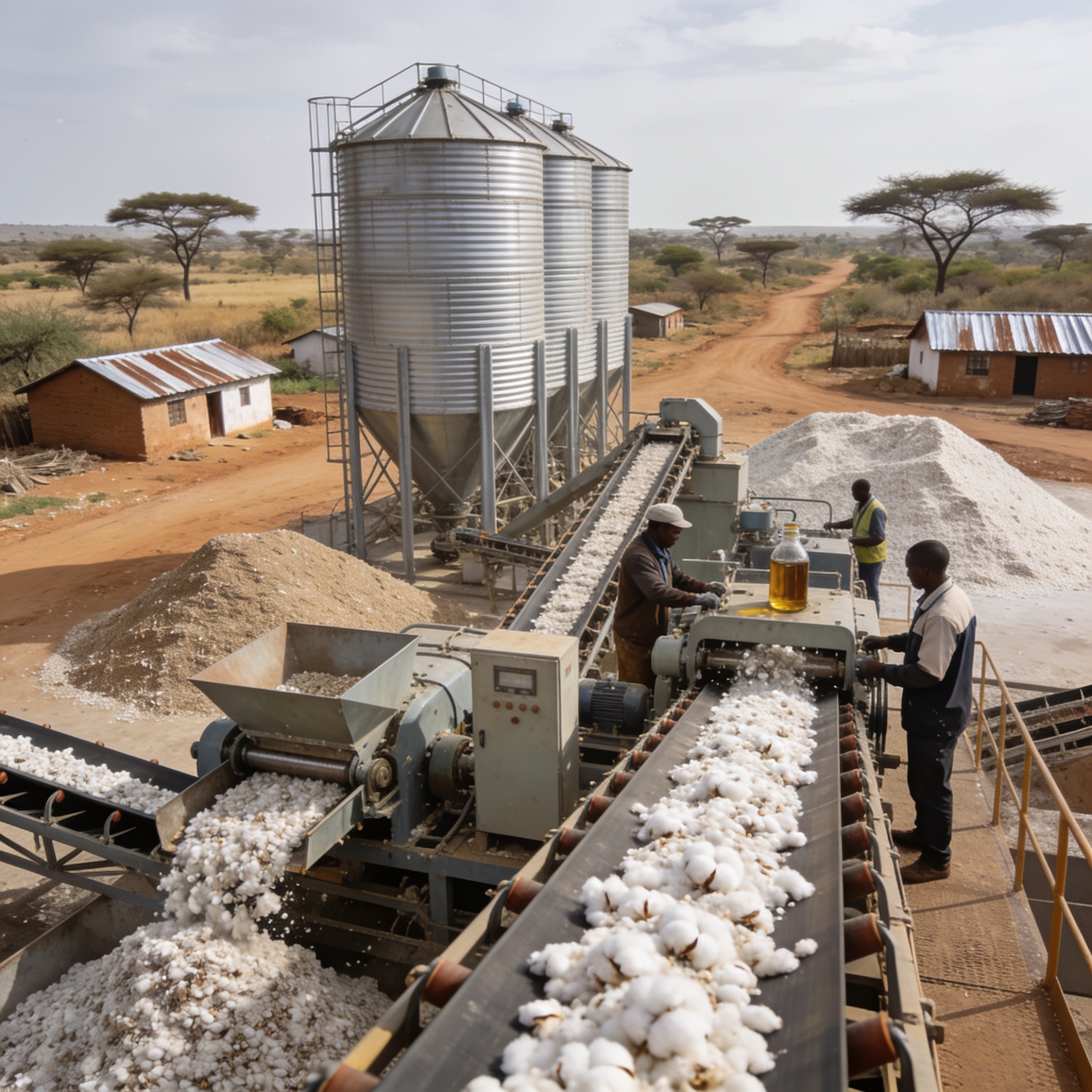
At the Cangrow Cotton Company (CCC) plant in Nembudziya, about 72 kilometres from Gokwe’s business centre, machinery crushes and refines tonnes of cottonseed daily. The golden oil extracted is sold to households, while the leftover cake becomes livestock feed and other by-products. “Cottonseed is no longer a waste product. It has become an important raw material for cooking oil production, proving that every part of the cotton crop has value,” said CCC regional manager Khumbulani Moyo.
This local processing is part of a broader shift in Zimbabwe’s cotton industry, which historically earned most of its income from lint while ginned seed was sold as a raw commodity. Now, companies like CCC are investing in crushing and refining capacity, aiming to maximise the value of every tonne of cottonseed.
For farmers, however, the benefits are still limited. While they welcome the new uses for their crop, many argue they are not adequately rewarded for the value created after the seed leaves their hands. Small-scale farmer Marry Chisvo from Gokwe South said, “We are only paid for the crop we deliver. After that, the seed is processed into cooking oil, stock feed, soap and other products, but farmers do not receive anything from those by-products.” She added that the biggest share of value goes to processors, not growers.
To address this, the Cotton Company of Zimbabwe (Cottco) and the government are investing more than US$1.5 million in a Gokwe oil-expression plant with a capacity of 60 metric tonnes per day. The facility will produce cooking oil commercially and process residue into livestock feed. Gokwe was chosen because it handles the country’s largest volume of seed cotton and has the workforce to support the operation.
Enock Chevedza, a councillor and veteran farmer in Ward 19, believes scaled-up processing could transform the district. “Cotton has educated generations of young people in this district. Many graduates, businesses and even the rapid growth of townships such as Manoti, Mateta One and Two, Nyarupakwe, Gawa, Manyoni, Hovano, Nyaradza and Gwehava owe their existence to the cotton industry,” he said.
Production figures are encouraging. By mid-June 2026, farmers had marketed more than 5.08 million kilograms of seed cotton, a dramatic increase from 310,625 kilograms during the same period in 2025. The Agricultural Marketing Authority projects a total production of 38,500 tonnes this season, up 33% from last year. While still far below the historic peak, the rebound will supply tens of thousands of tonnes of cottonseed for processing.
Alderman Ernest Chigaba, national vice-chairperson of the Cotton Producers and Marketers Association of Zimbabwe, stressed the need for local processing infrastructure. “We need oil-expressing machines here in Gokwe so that we can process the seed locally, create employment and reduce transport costs,” he said.
Despite Cottco’s placement under corporate rescue in April, the government remains committed to cottonseed value addition. Ministry of Agriculture permanent secretary Obert Jiri said, “We have the investment in Gokwe which we did with Cottco for the oil expressors plant because we understand the potential for cottonseed oil.”
For a region long dependent on cotton lint, the shift toward seed processing marks a new chapter. If farmers can be integrated more fully into the value chain, Zimbabwe’s “white gold” may finally deliver wealth not just from its fibre, but from the seed that remains behind.